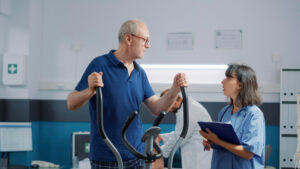
Experiencing a stroke is a life-altering event, and the path to recovery can feel daunting, especially for older adults. However, with the right support and knowledge, significant progress is possible. This guide for seniors to recover from a stroke is designed to provide clarity and hope for patients and their families. The journey involves several key phases and requires a dedicated team of healthcare professionals. Understanding the stages of recovery from stroke helps set realistic expectations and empowers everyone involved to navigate the challenges ahead. With patience and persistence, regaining independence and improving quality of life is an achievable goal. Reach out today to learn more about how we can help you enhance your golden years.
Understanding the Initial Stages of Recovery from Stroke
The recovery journey begins the moment a patient’s condition is stabilized in the hospital. This initial phase is critical for assessing the stroke’s impact and creating a personalized rehabilitation plan.
The Acute Care Phase
Immediately following a stroke, the medical team’s primary focus is on preventing another stroke and managing any life-threatening complications. This happens in the acute care unit of a hospital. During this time, rehabilitation often begins within 24 to 48 hours. Early mobilization, even if it’s just sitting up in bed or moving to a chair, is crucial for preventing complications like blood clots and pneumonia. The care team, which includes doctors, nurses, and therapists, will evaluate the stroke’s effects on:
- Motor skills: Strength, coordination, and balance.
- Cognitive function: Memory, attention, and problem-solving.
- Speech and swallowing: Communication abilities and safety when eating.
The Post-Acute Care Phase
Once medically stable, the patient will transition to the next level of care. This may be an inpatient rehabilitation facility, a skilled nursing facility, or, for some, a return home with intensive therapy. This is where the hard work of recovery truly begins. The goal is to maximize functional independence through a rigorous therapy schedule.
The Core Components of Stroke Rehabilitation
A comprehensive stroke rehabilitation program involves a multidisciplinary team of therapists working together. The focus is on retraining the brain—a concept known as neuroplasticity—to form new pathways around the areas damaged by the stroke.
Physical Therapy (PT)
A physical therapist helps stroke survivors relearn movement and balance. Therapy focuses on:
- Strengthening muscles: Exercises to regain control over weakened limbs.
- Improving mobility: Practicing walking, transferring from a bed to a chair, and navigating stairs.
- Balance training: Reducing the risk of falls, which is a major concern after a stroke.
Occupational Therapy (OT)
An occupational therapist helps patients regain the ability to perform Activities of Daily Living (ADLs). This is a practical, hands-on therapy focused on independence.
- Self-care tasks: Relearning how to dress, bathe, groom, and feed oneself.
- Home management: Adapting tasks like cooking and cleaning, often with the help of assistive devices.
- Cognitive skills: Working on memory and problem-solving as they relate to daily tasks.
Speech-Language Pathology (SLP)
Many stroke survivors experience aphasia (difficulty with language) or dysphagia (difficulty swallowing). A speech-language pathologist addresses these challenges through targeted exercises to improve communication and ensure safe swallowing to prevent choking and pneumonia.
Transitioning Home and Continuing Recovery
Returning home is a significant milestone, but it also presents new challenges. The goal is to continue the recovery process in a safe and supportive environment. This is where programs designed to help individuals live in the community become invaluable.
For many, the idea of long-term care in a facility is a major concern. Fortunately, there are options to prevent this. The Nursing Home Transition and Diversion (NHTD) waiver program is one such resource. This program provides support and services to help individuals who are eligible for nursing home placement to live safely in their own communities.
By leveraging NHTD waiver services, a senior recovering from a stroke can receive the necessary support right in their own home. These services are tailored to the individual’s needs and can include case management, home and community support services, and assistive technology. Exploring NHTD waiver services can be a key step in preventing institutionalization and promoting a successful long-term recovery at home. The Nursing Home Transition and Diversion program empowers seniors to remain part of their community while receiving the care they need.
Long-Term Recovery and Adapting to a New Normal
Recovery from a stroke doesn’t end after a few months; it’s an ongoing process. Progress can continue for years as the survivor adapts and finds new ways to accomplish tasks. Emotional health is just as important as physical recovery. It’s common for survivors to experience depression, anxiety, or frustration. Joining a stroke support group can provide a sense of community and shared experience, which is incredibly beneficial for both the survivor and their family caregivers.
This guide for seniors to recover from a stroke highlights that the journey is a marathon, not a sprint. By understanding the stages of recovery from stroke and leveraging all available resources, a fulfilling life after a stroke is possible. Feel free to call HouseCalls Home Care at 718-922-9200 if you or a loved one requires compassionate and competent in-home care services. You can also send an email to us at info@HouseCallshc.org for more information. Our goal is to help you find the best support for your needs. Alternatively, you can register your information at https://yuz88hfiyh7.typeform.com/to/E5thuv5G?typeform-source=statics.teams.cdn.office.net, and we will get back to you.