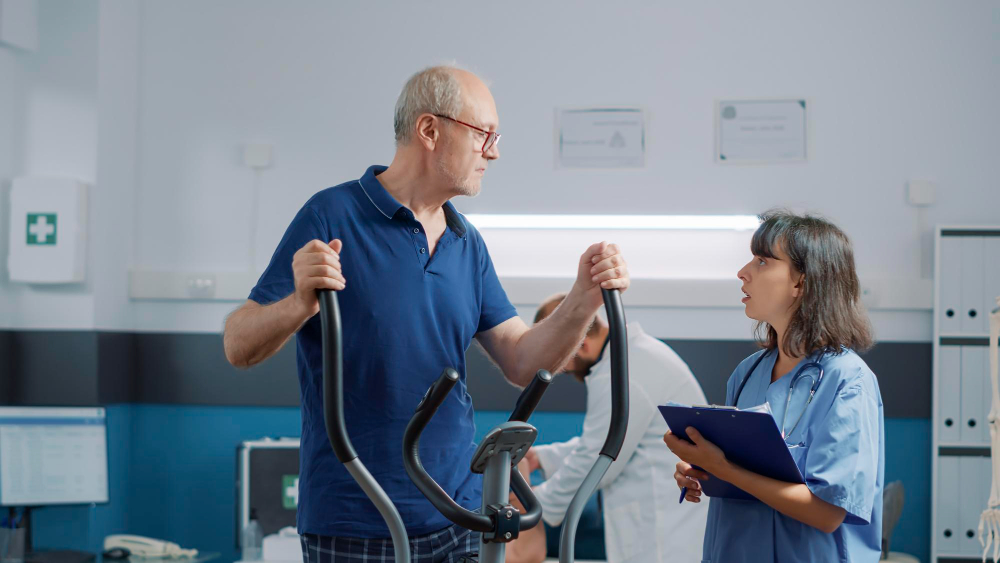
The Timed Up and Go (TUG) test is a quick mobility screening tool used to evaluate fall risk and independence in older adults. Completing the test in under 10 seconds suggests low fall risk and strong functional independence. Results above 12 seconds may signal a need for support or professional care.
Watching a parent or loved one slow down is one of the hardest parts of growing older together. You may notice they take longer to rise from a chair or seem unsteady on their feet. These changes matter more than they might appear, and evaluating senior mobility early can make a real difference in keeping your loved one safe and independent.
The 10-second “Get Up and Go” test offers a simple, reliable way to measure mobility and predict how well an older adult can manage daily life on their own. This post walks you through how the test works, what the results mean, and how home care services can help when extra support is needed.
How Do You Perform the Get Up and Go Test?
The Timed Up and Go (TUG) test requires no special equipment and can be done at home. Here is what you need:
- A sturdy chair with armrests
- A clear 10-foot (3-meter) path
- A stopwatch or phone timer
Step-by-step instructions:
- Have your loved one sit fully back in the chair with their arms resting on the armrests.
- On your signal, start the timer.
- They rise from the chair, walk 10 feet at a comfortable pace, turn around, walk back, and sit down again.
- Stop the timer when they are fully seated.
No warm-up walk is needed. The person should use any walking aid they normally rely on, such as a cane or walker.
What Do the Results Mean for Senior Independence?
The time it takes to complete the test gives a clear picture of mobility and fall risk:
- Under 10 seconds: Low fall risk, strong functional independence
- 10 to 12 seconds: Generally independent with good mobility
- 12 to 20 seconds: Moderate fall risk, some independence concerns
- Over 20 seconds: High fall risk, mobility problems likely affecting daily life
A result under 10 seconds is associated with the ability to go out independently and manage most daily activities. A result over 12 seconds, according to the Centers for Disease Control and Prevention, suggests a meaningful risk of falling and warrants further evaluation.
What Does the Test Reveal About Fall Risk and Independence?
Falls are the leading cause of injury among adults aged 65 and older in the United States. The TUG test helps identify the warning signs before a fall occurs.
The test measures several things at once: balance, walking speed, coordination, and the strength needed to transition from sitting to standing. Each of these plays a role in your loved one’s ability to live safely at home.
Score Interpretation: What to Do With the Results
Use the results as a starting point, not a final verdict.
- Under 10 seconds: Continue monitoring every 6 to 12 months. Encourage regular physical activity to maintain strength.
- 10 to 12 seconds: Talk with a primary care provider. A physical therapy referral may help maintain current function.
- Over 12 seconds: Prioritize a formal fall-risk assessment. Consider whether changes to the home environment or additional support are needed.
A single test result is most useful when tracked over time. A score that rises from 10 seconds to 16 seconds over one year is a meaningful signal, even if the numbers seem small.
How Do Home Care Services Support Senior Mobility?
A declining TUG score does not mean loss of independence is inevitable. The right support, introduced at the right time, can slow decline and protect quality of life.
Housecalls home care services are well-suited to this role. A trained care professional can assist with safe movement throughout the day, accompany your loved one on walks, and watch for changes that might otherwise go unnoticed.
Housecalls home care providers also help reduce the fear of falling, which is itself a risk factor. When older adults restrict their movement because they are afraid of falling, muscle weakness increases and mobility declines further.
Home care services can also coordinate with physical therapists and physicians to support any care plan already in place, keeping the whole picture in view.
Take the Next Step Toward Safer Aging
Evaluating senior mobility with the 10-second “Get Up and Go” test is one of the simplest things you can do to protect your loved one’s independence. A few minutes and a stopwatch can reveal a great deal.
If the results raise concerns, you do not have to navigate next steps alone. Our Housecalls Home Care Team is here to help you understand the options and connect your loved one with the right level of care. Reach out today by calling 718-922-9200 for a compassionate conversation about what your family needs.