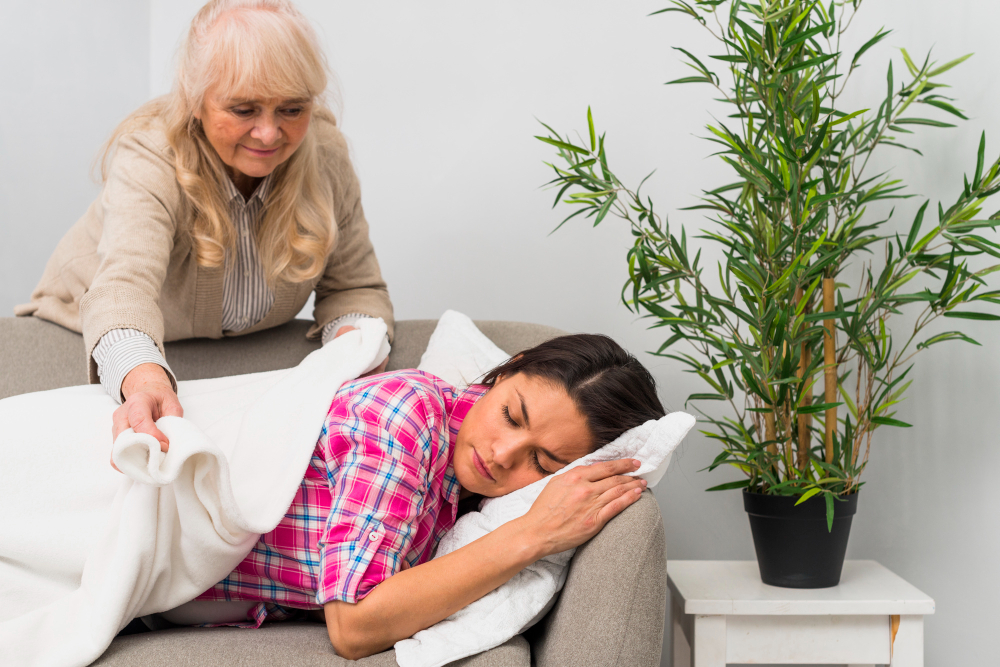
Vagus nerve stimulation for caregivers offers a practical, science-backed path to fast anxiety relief. These 3 nervous system resets- extended exhale breathing, cold water face immersion, and humming- can calm a stressed body in minutes, without medication or special equipment.
Caregiving is one of the most demanding roles a person can take on. The emotional weight, the broken sleep, the constant vigilance – it accumulates quietly, and then all at once. If you have ever felt your heart racing after a difficult moment with your loved one, or noticed that anxiety follows you even when nothing is wrong, your nervous system is telling you something important. Vagus nerve stimulation for caregivers is a set of 3 nervous system resets that offer fast anxiety relief, grounded in how your body actually works. These are not complicated techniques. They are accessible, evidence-informed tools you can use in minutes, wherever you are.
Why Are Caregivers Especially Vulnerable to Anxiety?
Caregiver stress is not simply a matter of having a hard job. It is a physiological pattern that builds over time.
When you are responsible for someone else’s safety and comfort, your body stays in a low-level state of alert. Your sympathetic nervous system governs your fight-or-flight response and runs closer to the surface. Small disruptions trigger larger reactions. Rest becomes harder to access even when you have the chance.
According to the American Psychological Association, caregivers report significantly higher rates of anxiety and depression than non-caregivers. That gap is not a reflection of weakness. It reflects how much the caregiving role asks of the human nervous system.
The vagus nerve is central to this picture. It is the longest nerve in your body, running from your brainstem down through your heart, lungs, and digestive system. When it is well-regulated, it helps your body shift out of stress and into recovery. When it is chronically underactivated, as it often is in caregivers, anxiety becomes harder to shake, and even a moment of calm can feel out of reach.
Vagus Nerve Stimulation for Caregivers: 3 Nervous System Resets for Fast Anxiety Relief
Each of the following resets directly activates the vagus nerve, helping your body move from sympathetic overdrive into parasympathetic recovery. None of them require equipment, a quiet room, or more than a few minutes.
Reset 1: Extended Exhale Breathing
Your exhale activates the vagus nerve more than your inhale does. Extending it deliberately, slowly sends a signal to your nervous system that it is safe to settle. Try this: inhale for 4 counts, then exhale for 6 to 8 counts. Repeat for 3 to 5 minutes.
Research published in Frontiers in Human Neuroscience found that slow, extended exhalation breathing increases heart rate variability, a key marker of vagal tone, and reduces subjective feelings of anxiety within minutes. You can do this sitting in your car, standing in a hallway, or lying in bed at the end of a long shift.
Reset 2: Cold Water Face Immersion
This one sounds simple because it is. Splashing cold water on your face or briefly submerging it in a bowl of cold water triggers the diving reflex, a mammalian physiological response that slows the heart rate and activates the parasympathetic nervous system through the vagus nerve.
You do not need ice water. Cool to cold tap water is sufficient. Hold your breath, submerge your face for 15 to 30 seconds, and repeat once or twice if needed. For many caregivers, this reset works in situations where breathing exercises feel inaccessible, moments of acute overwhelm when the mind is too activated to focus on counting breath.
Reset 3: Humming or Singing
The vagus nerve passes through your larynx. Vibrating your vocal cords through humming, singing, or even gargling creates direct mechanical stimulation of the vagus nerve and can shift your physiological state within minutes.
You do not need to be a strong singer. A low, steady hum sustained for 1 to 2 minutes is enough. Some caregivers find it easiest to do this in the car, or quietly while preparing a meal. The effect is cumulative: the more consistently you practice, the more responsive your vagus nerve becomes over time.
How Home Care Services Support Caregiver Well-Being
These resets are a starting point. They are not a substitute for structural support.
Caregiver burnout does not resolve through breathing techniques alone. It resolves when caregivers have access to real relief time away, professional assistance, and a care team they can trust.
Home care services play a direct role in that recovery. When a qualified professional takes on regular caregiving responsibilities, family caregivers gain the space to rest, reset, and attend to their own health. Consistent home care visits reduce the sense of constant vigilance that drives so much caregiver anxiety.
Housecalls Home Care understands that the person receiving care and the family around them both need support. Home care services through Housecalls Home Care are designed to provide reliable, compassionate assistance that families can count on not just for their loved one, but for their own peace of mind.
Your Well-Being Is Part of the Care Plan
Anxiety does not make you a less capable caregiver. It makes you a human one. Recognizing that your nervous system needs the same care and attention as your loved one’s physical health is not a small shift. It is an important one.
Start with one of these three resets today. Practice it consistently. And when you are ready to explore additional support, reach out to a Housecalls Home Care provider today by calling 718-922-9200 for a consultation. The team is here to help your family find a care arrangement that works one that protects your loved one and makes space for you, too.